From Tacit Knowledge to Strategic Intelligence:
Vibe Coding

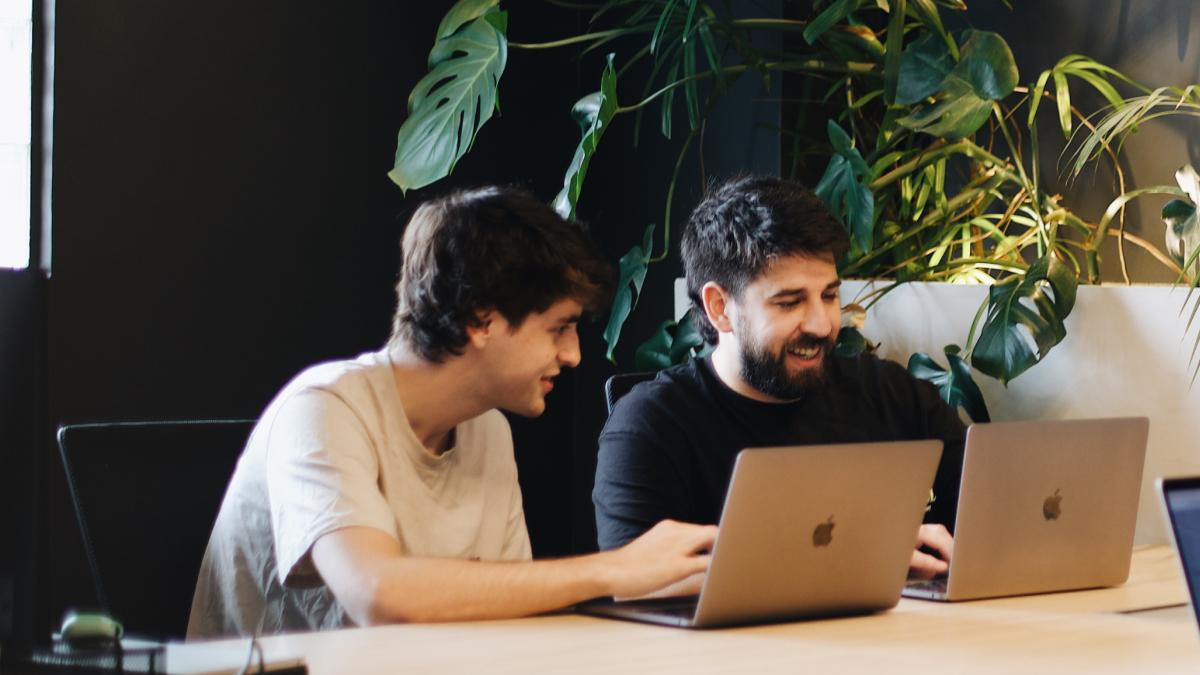
How tacit knowledge and AI can help organizations turn expertise into something they can learn from by implementing vibe coding.
Every organization has knowledge it cannot easily explain. Informal systems, habits, ahá moments, things that just… happen… or people who just know…
It lives in the way a senior developer spots an architectural problem before anyone else sees it. In the instinct of a product manager who knows that a seemingly simple request will create problems six months from now. In the architect who immediately recognizes that two systems will eventually collide.
Ask them how they know, and the answer is often:
“I’ve seen this before.”
That is tacit knowledge.
And it may be one of the most valuable forms of knowledge an organization has.
The problem is that tacit knowledge is difficult to scale. It lives in people, not systems. When those people leave, the organization doesn’t just lose capacity. It can lose judgment.
So the interesting question isn’t simply how to document what people know.
It is:
How do we transform individual expertise into organizational intelligence?
Knowledge doesn’t start as documentation
We often think about organizational knowledge as something that already exists in an explicit form:
- documents
- procedures
- technical specifications
- reports
- databases
- playbooks
- manuals
But that’s only the visible layer. A significant amount of expertise starts somewhere else.
It starts as experience.
A developer solves hundreds of problems. A designer observes hundreds of user interactions. A product manager participates in hundreds of conversations.
Over time, patterns emerge.
Eventually, a person can recognize something almost instantly, without consciously reconstructing every step that led to the conclusion.
That’s where tacit knowledge becomes powerful. And also where it becomes difficult to transfer.
From experience to intelligence through vibe coding
One useful way to think about this progression is through four increasingly explicit levels of knowledge.
This framework draws on ideas from cognitive science and the work of thinkers such as David Perkins around thinking, knowledge, and making thinking visible. It is not a formal four-stage Perkins model, but a practical way to apply those ideas to organizational knowledge.
1. Tacit knowledge
“I know it when I see it.”
This is knowledge someone can use without necessarily being able to explain it.
Imagine a senior developer reviewing a pull request.
They notice something feels wrong.
Maybe the abstraction is too complex. Maybe the dependency structure will create problems later. Maybe the implementation is technically correct but creates a maintenance burden.
They identify the problem in seconds.
But ask:
“Exactly how did you know?”
The answer might initially be:
“I don’t know. It just looks wrong.”
That doesn’t mean the knowledge is irrational; it means the reasoning has become highly compressed through experience.
Years of exposure to similar situations create patterns the person can recognize almost automatically.
That is expertise.
But expertise that cannot be explained is difficult to transfer.
2. Aware knowledge
“I’ve started recognizing my patterns.”
The next step happens when people begin to notice their own expertise.
The developer starts saying:
“When I see this kind of abstraction, it usually means we’re solving the wrong problem.”
Now the pattern has become more explicit.
The person isn’t simply recognizing something; they’re beginning to understand what they recognize and why.
This transition matters because it makes expertise easier to communicate.
Instead of:
“This feels wrong.”
We get:
“I’ve noticed that when we introduce this type of abstraction this early, we usually create unnecessary complexity later.”
The intuition hasn’t disappeared. It has become explainable.
3. Strategic knowledge
“Given this context, this is probably the better choice.”
Now knowledge becomes useful for decision-making.
The person can compare alternatives.
They can explain trade-offs.
They can account for context.
They can say:
“Option A is technically cleaner, but given our timeline, team structure, and expected growth, Option B is the better decision.”
This is no longer just expertise.
It’s judgment.
And organizations ultimately need judgment from experienced people.
The best decision isn’t necessarily the theoretically perfect one.
It’s the one that makes sense given the context, constraints, objectives, and consequences.
That’s strategic knowledge.
4. Reflective knowledge
“Why am I making this decision?”
The final step is the ability to examine one’s own thinking.
The question changes from:
“What should we do?”
to:
“Why do I think this is the right thing to do?”
And then:
“What assumptions am I making?”
“What evidence am I relying on?”
“What bias could be influencing me?”
“What would change my mind?”
This is where expertise becomes much more powerful.
The goal isn’t to eliminate intuition.
It’s to make intuition inspectable.
Reflection lets experienced people challenge their own patterns instead of simply repeating them.
And this is where AI changes the equation
Historically, moving from tacit to explicit knowledge required time.
Someone had to interview the expert, document their reasoning, write the playbook, capture the decision, explain the alternatives, and train someone else.
And even then, much of the context could be lost. AI development creates a new possibility and vibe coding amplifies it.
It can sit between experience and articulation.
After a technical decision, for example, AI can help a team ask:
- Why did we choose this architecture?
- What alternatives did we consider?
- What assumptions influenced the decision?
- What constraints were important?
- What would make us revisit this decision?
The AI isn’t necessarily providing the expertise. And when vibe coding becomes tacit for the team, all these questions are learnt and transformed into skills which then any AI tool will keep as an identity.
It is helping the expert externalize it.
That distinction matters.
AI as a cognitive amplifier
We usually talk about AI as a productivity tool.
- Write faster.
- Code faster.
- Analyze faster.
- Create faster.
But that’s only one dimension.
AI can also help people think about their own thinking. And incredibly enough, that’s why VIBE coding is called VIBE… the person “flows” and “vibes” with the AI tool.
It can make reasoning explicit, compare alternatives and expose trade-offs, capture decisions and the context behind them, challenge assumptions, connect knowledge across projects and teams, and transform knowledge generated by one person into something useful for everyone else.
This is where AI moves from a production tool to a learning infrastructure.

That is a very different outcome from simply generating more documentation.
You’re creating organizational memory. And organizational memory can compound.
Every project can teach the next project, every decision can inform the next decision, every mistake can become part of the organization’s learning system; the organization doesn’t simply accumulate information.
It accumulates better ways of thinking.
The real competitive advantage isn’t knowing more
Two companies may have access to exactly the same AI models.
The difference will increasingly come from what they know, how they organize that knowledge, and how quickly they can turn experience into better decisions.
That’s why the more interesting question isn’t:
“How can we use AI to produce more?”
It’s:
“How can we use AI to learn more from what we’re already doing?”
That requires a different mindset.
Instead of treating every project as an isolated delivery, we can treat it as a source of organizational knowledge.
Instead of asking only:
“Did we deliver?”
we can ask:
“What did we learn?”
Instead of documenting only what we decided, we can capture why we decided it.
Instead of preserving expertise inside individuals, we can begin turning expertise into a collective asset.
The Business Player perspective
This is particularly important to what we call the Business Player Mindset.
A Business Player doesn’t simply execute a task: they understand the context around it, recognize trade-offs, challenge assumptions, make decisions, and, critically, learn from those decisions.
AI can amplify that capability, but only if we use it for more than generation.
The goal is to help people ask better questions, examine decisions, share expertise, and learn from experience.
That’s a fundamentally different relationship with technology.
From knowledge management to knowledge development
Traditional knowledge management often asks:
“How do we store what we know?”
The next generation should ask:
“How do we continuously develop what we know?”
That’s a much more dynamic problem.
Knowledge isn’t a static asset sitting inside a database.
It’s created through a continuous loop:

AI can participate in every stage of that loop.
And when those loops speed up, organizations don’t just become more productive.
They become more intelligent.
The future isn’t AI replacing expertise
The future isn’t AI replacing expertise. It’s AI helping expertise become visible.
The senior developer still needs years of experience. The architect still needs judgment. The product manager still needs context. The designer still needs empathy. AI doesn’t magically create those things.
But it can help turn what those people learn into something that can be questioned, shared, reused, and improved. That is a much more interesting promise.
Because the ultimate value of AI may not be that it knows more than us. It may be that it helps organizations learn more from what their people already know.
At Effectus, we don’t only use AI to produce faster.
We use AI to learn faster.
Related articles

Aug 20, 2026 | 5 min read
From Artificial Intelligence to Augmented Intelligence: The Future of Vibe Coding in Software Development

Aug 18, 2026 | 4 min read
The Synthetic Mind: Why Business Player Mindset Is the Future of Vibe Coding

Sep 28, 2026 | 8 min read